Business Name: BeeHive Homes of Clovis
Address: 2305 N Norris St, Clovis, NM 88101
Phone: (505) 591-7025
BeeHive Homes of Clovis
Beehive Homes of Clovis assisted living care is ideal for those who value their independence but require help with some of the activities of daily living. Residents enjoy 24-hour support, private bedrooms with baths, medication monitoring, home-cooked meals, housekeeping and laundry services, social activities and outings, and daily physical and mental exercise opportunities. Beehive Homes memory care services accommodates the growing number of seniors affected by memory loss and dementia. Beehive Homes offers respite (short-term) care for your loved one should the need arise. Whether help is needed after a surgery or illness, for vacation coverage, or just a break from the routine, respite care provides you peace of mind for any length of stay.
2305 N Norris St, Clovis, NM 88101
Business Hours
Monday thru Sunday: 9:00am to 5:00pm
TikTok: https://tiktok.com/@beehivehomes_clovis
YouTube: https://www.youtube.com/@WelcomeHomeBeeHiveHomes
Facebook: https://www.facebook.com/beehiveclovis
Instagram: https://www.instagram.com/beehivehomesclovis/
Choosing assisted living is among the most substantial decisions a family makes around senior care. It impacts not only safety and health, but also identity, everyday rhythm, and financial resources for several years. The option between a smaller sized, home-style house and a larger assisted living or memory care neighborhood can feel particularly complicated, because both present themselves as safe, supportive alternatives, yet they provide really different day-to-day experiences.
I have strolled families through this choice in healthcare facility hallways, at kitchen area tables, and during psychological discharge conferences after a fall or crisis. The ideal choice seldom comes from shiny pamphlets. It comes from comprehending how each kind of setting really works, on a regular Wednesday afternoon, when no one is trying to impress you.
This guide looks at the distinctions in between small and big assisted living communities through three practical lenses: lifestyle, security, and expense. It also discuss memory care and respite care, because numerous families ultimately face those questions as well.
Two very different designs of "assisted living"
Assisted living is an umbrella term. Within it, you will discover 2 broad models.
Small assisted living frequently means residential care homes, board-and-care homes, or adult household homes. Usually they serve between 4 and 12 citizens, often approximately 16 depending on state regulations. Many are transformed single-family homes in communities. Staff frequently prepare, clean, and offer personal care in the same space.

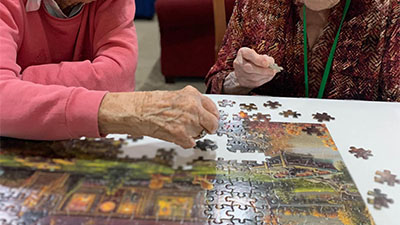
Large assisted living neighborhoods resemble apartment or senior living schools. They might have 50 to 200 residents or more. Homeowners normally have personal studio or one-bedroom houses, shared common areas, and a calendar of activities. These neighborhoods frequently consist of devoted memory care units or wings, and in some markets they become part of bigger continuing care campuses with independent living and nursing home services on the same site.
Both types aim to offer support with daily activities such as bathing, dressing, medication management, and meals, but they do so in very various environments.
Lifestyle: how the day actually feels
When families explain what they want for a parent, they seldom speak about care tasks. They discuss how they hope the individual will feel: understood, safe, promoted but not overwhelmed, respected, not lonely. Lifestyle distinctions between little and big assisted living shape those experiences more than the majority of people expect.
Rhythm and routine
In a small assisted living home, the routine typically feels informal and household-like. Breakfast might be served at a variety of times, with personnel cooking in a visible kitchen area. One resident may wander in at 7:15 for toast, another at 8:30 for eggs. The television might be on in a shared living room, and some homeowners help fold towels, chop vegetables, or water plants. Schedules exist, but they bend around the homeowners rather than the other way around.
In a bigger assisted living neighborhood, the schedule looks closer to a respite care hotel or cruise liner. Meals occur at fixed times in a dining room with menus and seating patterns. Activities are published on a monthly calendar. There is a morning exercise class, a 2 p.m. Bingo game, an arts activity in the afternoon, and sometimes live music on weekends. Structure is more powerful, which most homeowners either appreciate or endure, but some discover rigid.
The people who tend to flourish in each setting are often various. A former teacher who loves groups, conversations, and planned events might do very well in a larger neighborhood. Someone who never ever liked crowds, or who finds shifts tiring, might feel more at peace in a little home-style setting.
Privacy and personal space
Space is one of the starkest differences.
Small assisted living homes often supply personal or semi-private bedrooms that open onto shared living locations. Restrooms may be shared. Hallways are brief. You can generally see or hear staff from almost anywhere. This intimacy produces fast responses and regular casual check-ins, however likewise less privacy. If your parent treasures private time and delights in shutting the door to recharge, a small home might feel intrusive unless thoroughly chosen.
Large assisted living communities, by contrast, tend to provide more personal physical space. Locals typically have their own apartment or condo, with a private restroom and in some cases a kitchenette. Visitors can come and go without everybody in your house understanding. For couples, a one-bedroom unit frequently permits them to keep some semblance of married life in a more familiar way.
The compromise is that in a bigger structure, a resident can be physically alone for longer without casual observation. For some senior citizens, that self-reliance is exactly the point. For others, particularly those at risk of falls or with cognitive decline, it raises security concerns.
Social life and neighborhood fit
Social environment is rarely neutral. It either sustains or drains a person.
In smaller homes, the social circle is limited. With 6 or 8 locals, everybody understands each other's practices and quirks. This can feel like a family, in both the positive and tough sense. For somebody who dislikes big groups, this can be ideal. There is typically no pressure to attend structured activities, and discussion tends to be more organic.
In a big assisted living neighborhood, range is the selling point. There may be 60 potential lunch buddies and 10 different activities in a week. If your parent likes bridge, there is a sensible possibility of finding three other players. If somebody desires spiritual services, book club, or a males's breakfast, larger structures are more likely to provide it. On the other hand, introverted or frail homeowners sometimes pull away to their spaces and wind up more separated than in a little home, since it is much easier to be "missed in the crowd".
The right social setting also depends greatly on cognitive status. For senior citizens with advancing dementia, a big structure with complex hallways, numerous floors, and lots of faces can become confusing and demanding. They may function much better in a small environment, or in a dedicated memory care system that is structured around their requirements rather than general senior living.
Safety and care: what really happens when something goes wrong
Families frequently assume that larger communities are immediately much safer due to the fact that they look more like medical facilities. That assumption is not constantly proper. Security in elderly care depends on staffing patterns, training, supervision, design, and the specific requirements of the resident, more than on structure size alone.
Staffing levels and response
Small assisted living homes usually have less staff on duty at any offered time, but likewise fewer homeowners. For example, one caretaker might be accountable for 6 to 8 residents throughout the day, and 1 team member may cover the entire home in the evening. Since the structure is compact, that individual can normally reach any resident rapidly, and informal observation is constant.
In larger neighborhoods, the raw number of personnel is higher, however they cover much more ground. Ratios might be comparable and even a little much better on paper, yet action time can be longer since caregivers are spread out throughout several wings and floors. At night there might be only a handful of staff in a structure that houses 80 or more homeowners. A resident who falls in a personal apartment or condo might count on call buttons or wearable alarms. Those systems work well for some, however not for individuals who forget or decrease to use them.
What often matters most is not the specified ratio, however how well the personnel know specific homeowners. In small homes, staff typically acknowledge subtle shifts: a resident who is quieter than typical at breakfast, or who has a hard time a little more with transfers. That familiarity typically leads to earlier detection of urinary system infections, heart failure signs, or medication negative effects. In bigger neighborhoods, attentive health nurses can play a similar role, however only if the team has continuity and strong communication.
Medical oversight and intricacy of care
Assisted living, regardless of size, is not an alternative to skilled nursing. Still, lots of residents in both settings have complex medical needs.
Larger assisted living and memory care communities regularly have on-site visiting doctors, nurse practitioners, or collaborations with home health firms, physical therapists, and hospice companies. Regular primary care or lab draws may be done internal, which is a massive benefit for frail senior citizens or households with restricted transport. Bigger communities are also more likely to accept homeowners with higher care requirements, such as insulin injections, two-person transfers, or frequent monitoring.
Smaller homes vary commonly. Some focus on higher-acuity senior care and have outstanding relationships with local clinicians. Others explicitly restrict the level of medical complexity they will deal with. Regulations differ by state, therefore does enforcement. When exploring, ask precisely which tasks the personnel can carry out, and what occasions would set off a needed move to a nursing home.
For citizens with dementia, especially those who roam or establish behavioral modifications, a devoted memory care system within a larger community can provide safe doors, specialized programming, and personnel trained particularly for dementia care. Some little homes likewise concentrate on memory care, however they might or may not provide secure borders and structured activities. The best choice depends on the nature of the person's dementia, not just the medical diagnosis itself.
Falls, wandering, and emergency situation response
Falls are the single most typical safety issue households discuss, and with great reason. A hip fracture or head injury can alter the whole trajectory of an older grownup's life.
In a little assisted living home, fall danger is typically reduced through close observation and a compact environment. Less long corridors and quicker personnel gain access to suggest that a resident is less likely to rest on the floor for a prolonged period. Furnishings and bathrooms might also be adapted better since there are fewer systems to customize. Nevertheless, if the home has just one awake employee during the night, that person may be assisting one resident while another attempts to get out of bed alone.
In larger communities, technology plays a higher role: pull cords, bed alarms, motion sensors, and sometimes wearable gadgets. These can be extremely effective, however they likewise introduce false alarms and require the resident to endure them. Emergency medical services typically have easy gain access to and clear procedures for going into the structure. In a small home, paramedics can reach the person quickly as well, however the address might be less visible, and personnel training in emergency situation protocols varies.
For citizens who roam, especially during the night, protected memory care units in larger neighborhoods supply controlled exits and carefully developed strolling loops. Some little homes manage wandering securely because the space is enclosed and personnel are continuously nearby. Others are not truly equipped for locals who actively try to leave; doors may be alarmed however not locked, and constant redirection becomes challenging with restricted staffing.
Cost: what you pay, and what you get for it
Cost is where families frequently experience the most surprise. The variety is broad, and price tag do not inform the whole story.
Pricing structures
Large assisted living communities often utilize a base-rate-plus-level-of-care design. The base rate covers lease, utilities, meals, housekeeping, and access to typical facilities such as transport and activities. Care costs are then layered according to an evaluation: aid with bathing, dressing, medication management, and so forth. Memory care units generally cost more than general assisted living, both because of higher staffing and safe environments.
Small assisted living homes might use simpler prices: a single month-to-month rate that consists of most care, or a smaller sized variety of care levels. Some charge slightly higher rates for homeowners who need significant assistance with movement, toileting, or behavioral issues, however the structure is normally less granular than in huge communities.
In lots of areas, small homes and big neighborhoods being in a similar cost band. In others, shop small homes charge a premium, while in lower-income communities, big chain communities may be relatively less expensive. It is important not to presume that "home-style" automatically implies cheaper.
Hidden expenses and value
When assessing expense, families do much better when they look beyond the month-to-month billing to total costs and value.
Transportation is a fine example. Lots of big assisted living neighborhoods include set up transportation for medical appointments, grocery journeys, and neighborhood trips. If your parent stops driving, this can prevent significant taxi, rideshare, or family time expenses. Smaller sized homes in some cases rely more heavily on households for transport, or charge a per-trip fee.
Another example is activities and products. Big communities frequently fold recreational programming, workout classes, and basic supplies into the monthly rate. In small homes, the general expense may be lower, however households may require to spend more on individual items, private physical treatment, or external adult day programs to keep a loved one stimulated.
Respite care prices is its own world. Both small and big assisted living communities may provide short-stay respite care, either in furnished homes or spare rooms. Per-day rates are normally greater than the pro-rated regular monthly rate, but they can still be far cheaper than a healthcare facility stay or crisis-driven knowledgeable nursing admission. Households who look after elders in your home, specifically those with dementia, often utilize respite care strategically to prevent burnout.
Finally, consider for how long a setting can reasonably sustain your parent's needs. A somewhat more pricey community that can securely support your parent for three to 5 years might end up cheaper than a lower-cost choice that requires a relocate to a nursing home within a year because it can not handle rising care needs.
Memory care: when dementia changes the equation
Dementia complicates every aspect of the small-versus-large decision. People with cognitive impairment typically experience environments more intensely, and what feels inviting to a single person might feel frightening to another.
Dedicated memory care systems in bigger neighborhoods are developed specifically for residents with Alzheimer's illness and other dementias. They generally include safe and secure doors, consistent routines, easier design, and personnel trained in dementia interaction. Activities are structured around cognitive abilities: music, sensory objects, brief craft projects, or mild workout rather than lectures or card games.
For some individuals, particularly those who were social and outgoing before dementia, a memory care neighborhood within a bigger school offers both safety and significant engagement. They might still participate in particular larger-community events with guidance, while living in a smaller, safeguarded unit.
Other elders do better in extremely small settings. Lots of residential care homes successfully work as informal memory care, with nearly all locals dealing with some level of cognitive decrease. The familiar, home-like environment and continuous distance to personnel can reduce agitation and roaming. However, not all little homes have staff who are deeply trained in dementia care, and few offer the very same depth of structured shows as a specialized memory care community.
When dementia exists, households need to focus less on the label and more on the actual environment: sound level, lighting, personnel disposition, usage of restraint or sedating medications, and the ability to keep the person's habits and delights. A peaceful individual who delighted in gardening might be overwhelmed by a large, lively memory care system however material in a small home with a yard. Another resident who liked crowds and movement may wilt in that very same little home but thrive in a vibrant memory care community with music, dancing, and regular group activities.
Respite care: attempting before committing
Many households are unaware that both small and large assisted living neighborhoods offer respite care choices. Respite care supplies a short-term stay, typically from a couple of days to a number of weeks, in a completely supplied room with the very same elderly care services as long-term citizens receive.
This can be vital in numerous situations. A family caretaker might need surgery, travel for work, or a rest after months of offering extreme support. A health center may release an older adult who is not yet all set to return home securely but does not meet criteria for a skilled nursing center. Or a household merely wishes to test whether assisted living, in any form, is acceptable to the elder before making an irreversible move.
In practice, respite stays serve as a stress test for the match between individual and environment. In a small home, respite permits the family to see whether the elder adapts to close-quarters living and a little group. In a large community, respite offers a taste of structured activities, dining-room dynamics, and how the personnel react to the person's specific needs.
Respite care is not safe; shifts can temporarily aggravate confusion or agitation, particularly in individuals with dementia. Still, when handled attentively, a brief stay offers information that no tour can match.
Lifestyle, safety, cost: essential differences at a glance
Used well, a short contrast can hone what the longer analysis has checked out. The following high-level contrasts capture the most common patterns families encounter.
- Small assisted living often offers a home-like atmosphere, close personnel familiarity, and flexible regimens, but with limited privacy and less official activities. Large assisted living typically provides private apartments, structured social programs, and more on-site services, yet can feel impersonal or frustrating to some residents. Small homes can stand out at early detection of subtle health modifications due to continuous proximity, while bigger neighborhoods typically bring more powerful formal medical partnerships and dedicated memory care units. Costs for both can be comparable, but big neighborhoods frequently utilize detailed tiered pricing and include transportation and substantial activities, whereas small homes may have simpler prices however less integrated services. For locals with dementia, the best setting depends more on individual character and phase of health problem than on size alone, with both small homes and big memory care systems using distinct strengths and risks.
How to decide: concerns that cut through the brochure language
Beyond features and floor plans, the strongest decisions typically emerge from focused concerns. Asking the exact same concerns across several neighborhoods, both small and large, makes distinctions visible.
- How lots of residents are here, and the number of staff are generally on responsibility throughout the day, evening, and overnight? What specific care jobs can staff legally and virtually supply, and what changes would set off a required move to a greater level of care? How do you react if a resident starts to decrease cognitively, falls more often, or becomes more withdrawn socially? For memory care or citizens with dementia, what training do personnel receive, and how is life structured to avoid distress, not just react to it? What is consisted of in the regular monthly fee, what is extra, and how have expenses typically changed for families over the very first one to three years?
The answers typically sound polished, however the tone and specificity reveal as much as the content. Communities that speak clearly about limitations are often much safer long-lasting partners than those that guarantee to "handle anything" for the sake of a signed contract.

Matching setting to person, not individual to setting
Assisted living, memory care, and respite care are tools of senior care, not ends in themselves. The very best environment for an older adult is not the one with the latest decoration or the longest list of facilities. It is the one that fits the individual's routines, vulnerabilities, social style, medical intricacy, and monetary reality.
Some elders will bloom in a large community, volunteering at the front desk, reciting poetry in the lounge, and filling their calendar from morning to night. Others will feel more protected consuming oatmeal at a familiar cooking area table in a six-bed home, greeting the very same two caretakers every day.
Families do their finest work when they look past marketing labels like "cozy" or "luxury" and ask, quietly and seriously: where will this individual feel most like themselves, and where will the staff in fact have the ability to secure that self as needs alter? The answer to that question, more than any abstract dispute about small versus big, must guide the choice.
BeeHive Homes of Clovis provides assisted living care
BeeHive Homes of Clovis provides memory care services
BeeHive Homes of Clovis provides respite care services
BeeHive Homes of Clovis supports assistance with bathing and grooming
BeeHive Homes of Clovis offers private bedrooms with private bathrooms
BeeHive Homes of Clovis provides medication monitoring and documentation
BeeHive Homes of Clovis serves dietitian-approved meals
BeeHive Homes of Clovis provides housekeeping services
BeeHive Homes of Clovis provides laundry services
BeeHive Homes of Clovis offers community dining and social engagement activities
BeeHive Homes of Clovis features life enrichment activities
BeeHive Homes of Clovis supports personal care assistance during meals and daily routines
BeeHive Homes of Clovis promotes frequent physical and mental exercise opportunities
BeeHive Homes of Clovis provides a home-like residential environment
BeeHive Homes of Clovis creates customized care plans as residents’ needs change
BeeHive Homes of Clovis assesses individual resident care needs
BeeHive Homes of Clovis accepts private pay and long-term care insurance
BeeHive Homes of Clovis assists qualified veterans with Aid and Attendance benefits
BeeHive Homes of Clovis encourages meaningful resident-to-staff relationships
BeeHive Homes of Clovis delivers compassionate, attentive senior care focused on dignity and comfort
BeeHive Homes of Clovis has a phone number of (505) 591-7025
BeeHive Homes of Clovis has an address of 2305 N Norris St, Clovis, NM 88101
BeeHive Homes of Clovis has a website https://beehivehomes.com/locations/clovis/
BeeHive Homes of Clovis has Google Maps listing https://maps.app.goo.gl/SMhM3zbKaKgR1UAX6
BeeHive Homes of Clovis has TikTok page https://tiktok.com/@beehivehomes_clovis
BeeHive Homes of Clovis has Facebook page https://www.facebook.com/beehiveclovis
BeeHive Homes of Clovis has Instagram page https://www.instagram.com/beehivehomesclovis/
BeeHive Homes of Clovis has an YouTube page https://www.youtube.com/@WelcomeHomeBeeHiveHomes
BeeHive Homes of Clovis won Top Assisted Living Homes 2025
BeeHive Homes of Clovis earned Best Customer Senior Service Award 2024
BeeHive Homes of Clovis placed 1st for Senior Living Communities 2025
People Also Ask about BeeHive Homes of Clovis
What is BeeHive Homes of Clovis Living monthly room rate?
The rate depends on the level of care that is needed. We do a pre-admission evaluation for each resident to determine the level of care needed. The monthly rate is based on this evaluation. There are no hidden costs or fees
Can residents stay in BeeHive Homes until the end of their life?
Usually yes. There are exceptions, such as when there are safety issues with the resident, or they need 24 hour skilled nursing services
Do we have a nurse on staff?
No, but each BeeHive Home has a consulting Nurse available 24 – 7. if nursing services are needed, a doctor can order home health to come into the home
What are BeeHive Homes’ visiting hours?
Visiting hours are adjusted to accommodate the families and the resident’s needs… just not too early or too late
Do we have couple’s rooms available?
Yes, each home has rooms designed to accommodate couples. Please ask about the availability of these rooms
Where is BeeHive Homes of Clovis located?
BeeHive Homes of Clovis is conveniently located at 2305 N Norris St, Clovis, NM 88101. You can easily find directions on Google Maps or call at (505) 591-7025 Monday through Sunday 9:00am to 5:00pm
How can I contact BeeHive Homes of Clovis?
You can contact BeeHive Homes of Clovis by phone at: (505) 591-7025, visit their website at https://beehivehomes.com/locations/clovis/ or connect on social media via TikTok Facebook or YouTube
Leal's Mexican Food Restaurant provides familiar regional cuisine where residents in assisted living, memory care, senior care, elderly care, and respite care can enjoy relaxed meals.